In short
Sandwich generation burnout is the exhaustion that builds when you are caring for an aging parent and a dependent child at the same time. In the US, the Pew Research Center puts 54% of people in their forties in this position. It exhausts differently because the demands are unpredictable, emotionally loaded, and never let up at the same time.
New here? The free Sacred Path quiz reads which of these patterns is running you, in about ninety seconds.
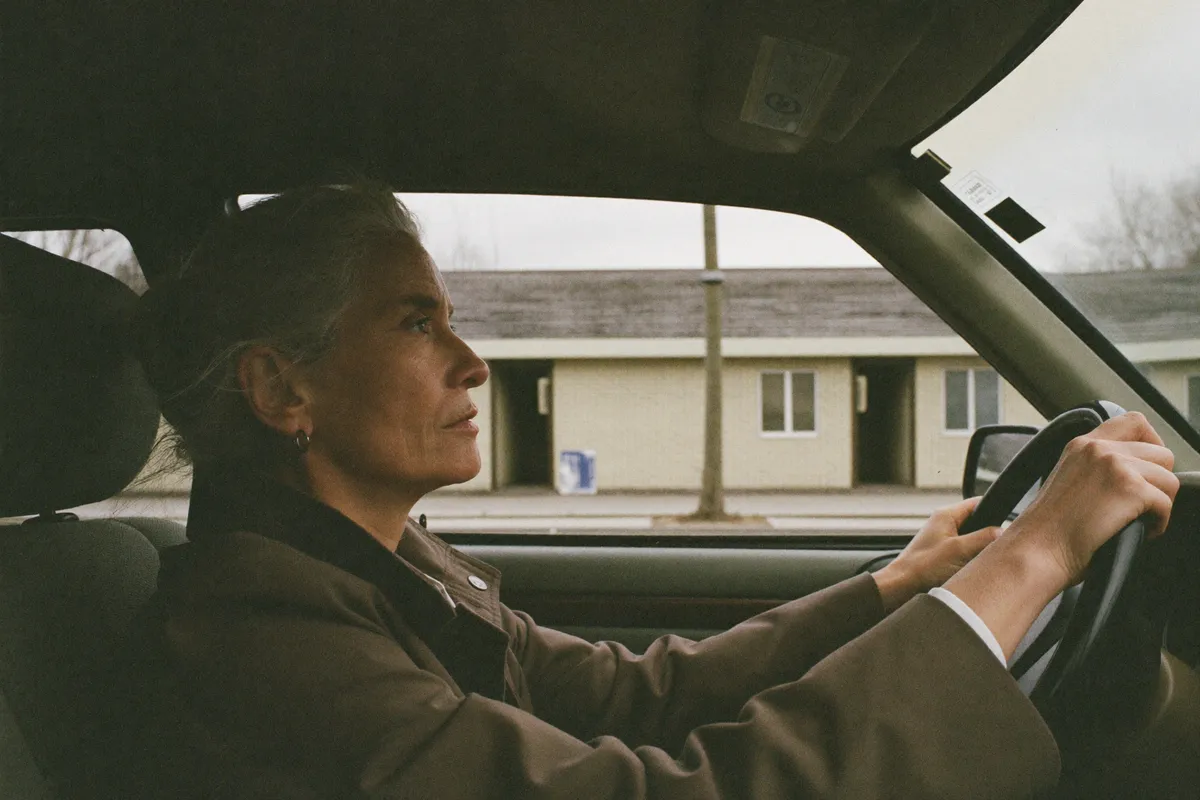
You are in the car park outside your mother's flat, and you have been sitting there for eleven minutes because your daughter has texted twice and you cannot make your hand start the engine.
Inside the flat there is a woman who used to plait your hair and who now asks you the same question four times in an afternoon. At home there is a fifteen-year-old who needs something from you that you cannot currently name. Between them, in the driver's seat, is a woman in her forties who cannot remember the last time anybody asked her a question she was allowed to answer honestly.
This is the middle. It has a name, the sandwich generation, and the exhaustion it produces has one too. There are a great many of you in it.
What is the sandwich generation?
The sandwich generation is the group of adults supporting an aging parent while still raising or financially supporting a child. The Pew Research Center defines it precisely: having a parent aged 65 or older, while either raising a child under 18 or having given financial support to an adult child in the past year. In the US that is about 23% of adults, and 54% of Americans in their forties.
If you are in your forties, that number is worth sitting with. This is the majority experience of the decade, not an arrangement most people manage easily while you alone struggle.
Why is the sandwich generation so stressful?
The obvious explanation is that there is too much to do. That undersells it, and it makes the exhaustion sound like a scheduling problem you could solve with a better system.
Three things make this stage its own animal.
The two curves run opposite ways. Parenting, broadly, gets lighter. The child who needed you every ninety minutes now needs you for lifts and money and the occasional two in the morning. Caring for an aging parent runs the other direction. It gets heavier. It keeps getting heavier, and everyone involved knows how it ends.
One of the jobs comes with grief attached. You are managing appointments and medication and a hallway that needs a rail, and at the same time you are watching the reversal of the oldest relationship you have, in slow motion, while being expected to function. Grief for someone who is still alive is disorienting because there is no ceremony for it and no obvious moment to be comforted.
It runs on interruptions. A fall, a phone call from a neighbour, a school issue on the same afternoon as a consultant appointment. What wears people down is not the hours. It is that no hour is reliably yours, so your nervous system never fully stands down. That is the same wiring I describe in the invisible load, scaled up and given two households to track.
What are the signs of sandwich generation burnout?
None of this is a diagnostic checklist. It is the pattern women describe when they finally describe it.
- Tiredness that a good night's sleep does not touch
- A drop in your stomach when a specific name lights up your phone
- Resentment, arriving fast and complete, followed within seconds by guilt
- Efficiency where warmth used to be, especially with your parent
- Snapping at whoever is safest, usually your partner or your teenager
- Your own dental appointment, cervical screening, or physio referral quietly postponed twice
- The sense that you are performing all your relationships rather than being in any of them
If you are also somewhere in perimenopause, which for most women begins during the forties, all of this lands on a body already dealing with disrupted sleep and a shorter fuse. I write about that collision in the perimenopause symptoms guide. Two real things are happening at once and each makes the other harder to bear.
Caregiver strain is a recognised health issue. Persistent low mood, hopelessness, or exhaustion that does not lift with rest is worth taking to a doctor.
Why the sandwich generation breeds resentment
This is the part almost nobody says out loud.
You can love your mother completely and dread the drive to her flat. You can be glad your father is still here and furious about what this year has cost you. You can adore your child and feel a flare of something ugly when they need you at the exact moment your parent does.
None of that makes you a bad daughter. Resentment is not the opposite of love. It is what love does when it is asked to run without rest, without acknowledgement, and without an end date.
The guilt that follows the resentment usually does the greater damage. Resentment is information about a real imbalance. Guilt just makes you work harder at the thing that caused it, which is how women end up doing more in the exact month they should be doing less. I wrote about that loop in the resentment of being needed.
Why it lands on you and not your brother
Sometimes it is proximity or flexible work. Often it is older than that.
If you were the child who read the room, managed the siblings, and got praised for being the sensible one, the family already has a designated person, and the designation was made decades ago. Nobody revisits it when the parents age. The role simply activates, and everyone including you experiences it as the natural order rather than a decision anyone made. That is the long tail of eldest daughter syndrome.
Which matters practically, because families rarely reallocate care in response to fairness. They reallocate in response to specifics. "Can you help more with Mum" produces sympathy and nothing else. "Can you take every second Saturday and manage the pharmacy account" produces a yes or a no, and either answer is more useful than the sympathy.

What actually helps with sandwich generation burnout
Not more willpower. Women who try that route tend to describe the same thing afterwards: they got through it, and they were not well while they did.
- Separate what is yours from what has merely landed on you. Write the whole list. On paper, not in your head, because your head has been holding it for two years and has stopped seeing it. Mark the items that genuinely require you specifically. A third of that list, for most women, has simply never been handed to anyone else.
- Ask siblings for a named task. Specific and repeating. Vague requests preserve the current arrangement while making everyone feel bad about it.
- Find out what formal support exists where you live, before you are desperate. Whatever your country calls it: a carer's needs assessment, respite hours, day services, statutory carer's leave from work. Almost everyone finds these after the crisis rather than before it.
- Protect one small non-negotiable. Forty minutes, the same days each week, that does not move because someone else needs something.
- Let the help be imperfect. The carer will fold the towels wrong. Your brother will take her to the appointment without the list. If your standard is that it must be done your way, you have designed a system with exactly one possible worker.
- Tell one person the truth. Not so they can fix it. So that one human being holds an accurate picture of your life while you are living it.
How do you survive the sandwich generation?
There is no version of this stretch that you get to do lightly. It is one of the hardest things a person does, and you are doing it in a culture that treats it as a private inconvenience rather than as work.
None of this started with your mother's diagnosis. It started with a much older arrangement about who copes, which is what the strong one is really about.
What you can change is whether you go through it invisibly. Being known while you carry something does not lighten it. It does stop it from becoming the thing nobody ever knew about you.
The eleven minutes in the car park will end. You will start the engine, because you always do. The only question worth anything is whether one person in your life knows about the eleven minutes.
You have been the one who holds things together for a long time, and this stage is only the most demanding expression of a much older pattern. The free Sacred Path quiz names which pattern is running you, in about two minutes. It asks nothing of you. There has probably not been much of that lately.
This is reflection for self-understanding, not therapy or medical advice. Caregiver strain is a genuine health issue. If you are experiencing persistent low mood, hopelessness, or exhaustion that does not lift, please speak to your doctor.
Common questions
What is the sandwich generation?
The sandwich generation refers to adults supporting an aging parent while also raising or financially supporting a child. Pew Research Center defines it as having a parent aged 65 or older while either raising a child under 18 or having given financial support to an adult child in the past year. About 23% of US adults are in that position, rising to 54% of people in their forties. It describes a life stage, not an age group, and it rarely resolves quickly.
Why is the sandwich generation so stressful?
Because it combines two kinds of care that cannot be scheduled around each other. A child's needs are broadly predictable and get lighter over time. An aging parent's needs are unpredictable and get heavier, and they often arrive with grief attached, since you are watching someone who once looked after you begin to need looking after. Add a job and the arithmetic simply stops working.
What are the signs of sandwich generation burnout?
Common signs include exhaustion that sleep does not fix, dread when a particular name appears on your phone, resentment followed immediately by guilt, losing interest in things you used to enjoy, snapping at the people who need you least, and quietly deferring your own medical appointments. If low mood, hopelessness, or an inability to function persist, that is worth taking to a doctor.
How do you survive the sandwich generation?
By treating it as a period with a structure. That means naming what is actually yours to carry, involving siblings in specific repeating tasks, finding out what formal support exists where you live before you are desperate, protecting a small non-negotiable amount of time for yourself, and accepting help in imperfect forms. Trying harder is the approach that fails most reliably.
If any of this felt like it was written about you, that is exactly what the free Sacred Path reading is for. It names your pattern and the doorway back to yourself.