
In short
The invisible load is the unseen mental and emotional work of running a life: remembering, planning, anticipating, and managing everyone's needs before they become problems. It falls disproportionately on women, not because they are naturally better at it, but because they were raised to. Because it produces no visible output, it goes unnoticed and unshared, which is exactly why it exhausts. Naming it is the first step to redistributing it.
New here? The free Sacred Path quiz reads which of these patterns is running you, in about ninety seconds.
Your partner asks, kindly, "why are you so tired? I did the dishes." And you don't know how to explain that the dishes were never the point.
The point was knowing the dishes needed doing. And that the dishwasher tablets are nearly out. And that the school form is due Thursday, the dog is due his flea treatment, your mother's birthday is in nine days, the milk expires tomorrow, and one of the kids has been quiet in a way that means something. You are running all of it, all the time, in a browser with a hundred tabs open that nobody else can see.
That is the invisible load. And the reason it exhausts you is the same reason no one thanks you for it: it doesn't show.
What the invisible load is
The invisible load is the unseen mental and emotional work of keeping a household and its people running. It is the management layer underneath the tasks: the remembering, the planning, the deciding, the noticing that something is about to become a problem before anyone else has looked up.
Researchers split it into two threads. The mental load is the cognitive work: tracking, scheduling, remembering, being the one who holds the whole system in her head. The emotional labor, a term coined by sociologist Arlie Hochschild, is the work of managing feelings, yours and everyone else's, to keep the peace and keep people comfortable.
Both share one cruel feature: they are invisible. A clean kitchen is visible. The dozen decisions and the mental tracking that produced it are not. You do the work, no one sees it, and after enough years you start to wonder whether you are inventing your own exhaustion.
Why it lands on women
Here is what needs saying plainly, because the guilt in this topic runs deep: you did not end up carrying this because you are uniquely capable or because you chose it. You ended up carrying it because you were raised to, and because the household organized itself around you doing it.
The common story is that women carry more of this work because they are naturally better at it. The research says otherwise. As health systems like Kaiser Permanente note, the imbalance traces to socialization: girls are the ones asked to set the table while their brothers get called to eat, the ones told to "keep an eye on your sister," the ones praised for being so thoughtful and helpful. Thirty years of that hardens into reflex. By adulthood it is invisible even to you: you "just know" what needs doing, and everyone, you included, files that knowing under personality instead of unpaid work.
This is the exact machinery underneath the strong one. The invisible load is what the strong one is carrying when she looks, to everyone including herself, like she is simply coping well.
What it costs you
The chores are the cheap part. What costs you is everything still running after they are done.
A mind that never powers down. Background processes do not close. Even when the visible work is finished, the tracking continues, which is why you can sit down at nine at night and still not feel off duty. There is always another tab open.
Resentment you feel guilty about. It leaks out sideways, over a cereal bowl left on the counter, and then you feel ashamed because on paper everyone is doing their bit. The resentment is accurate. It is what years of carrying a load alone, while being told it wasn't a load, feel like from the inside.
Exhaustion that reads as fragility. Studies link a heavy mental load to emotional exhaustion, irritability, and disrupted sleep. From the outside it can look like you are struggling to cope with an ordinary life. Inside, you are coping extraordinarily well with an invisible second job. If that daily tiredness has become the loudest thing in your body, tired of being the strong one is about exactly this.
The erasure. The quietest cost. Work no one sees is work no one values, and eventually you stop valuing it too, until you cannot answer the simple question of what you actually did all day, even though you never stopped.
You feel the whole tax in one ordinary moment: two in the morning, your partner asleep beside you, and you are awake running tomorrow, has the permission slip been signed, is there anything in for lunches, did you reply to the teacher. He gets to file the day as done and sleep. You do not, because the person who holds the whole system in her head never gets to set it down, not even in the dark.
How to explain it (so it can finally be shared)
The reason "just ask for help" fails is that it keeps you as the manager. You ask, they do, and the noticing, planning, and remembering, the actual load, stays yours. You have simply added "delegating and supervising" to the pile.
The move that works is making the invisible visible, then transferring whole categories.
Name the management layer, not the task. Not "can you do bath time" but "I want you to own bath time completely, which means noticing when it needs to happen, knowing where the clean pyjamas are, and remembering it without me reminding you." The reminding is the load. Give that away too.
Transfer, don't delegate. Delegation keeps you as head office. Transfer hands over the whole department: the school emails, the meal planning, the family calendar, including the right to run it differently and imperfectly. It will be done worse than you would do it. That is the price of putting it down, and it is a bargain.
Let the gap be visible. When you stop being the backup for a category you handed over, something will be forgotten. Let it be. The forgotten thing is not proof you should take it back. It is everyone around you learning that the load was real, and that it now lives somewhere other than your head.
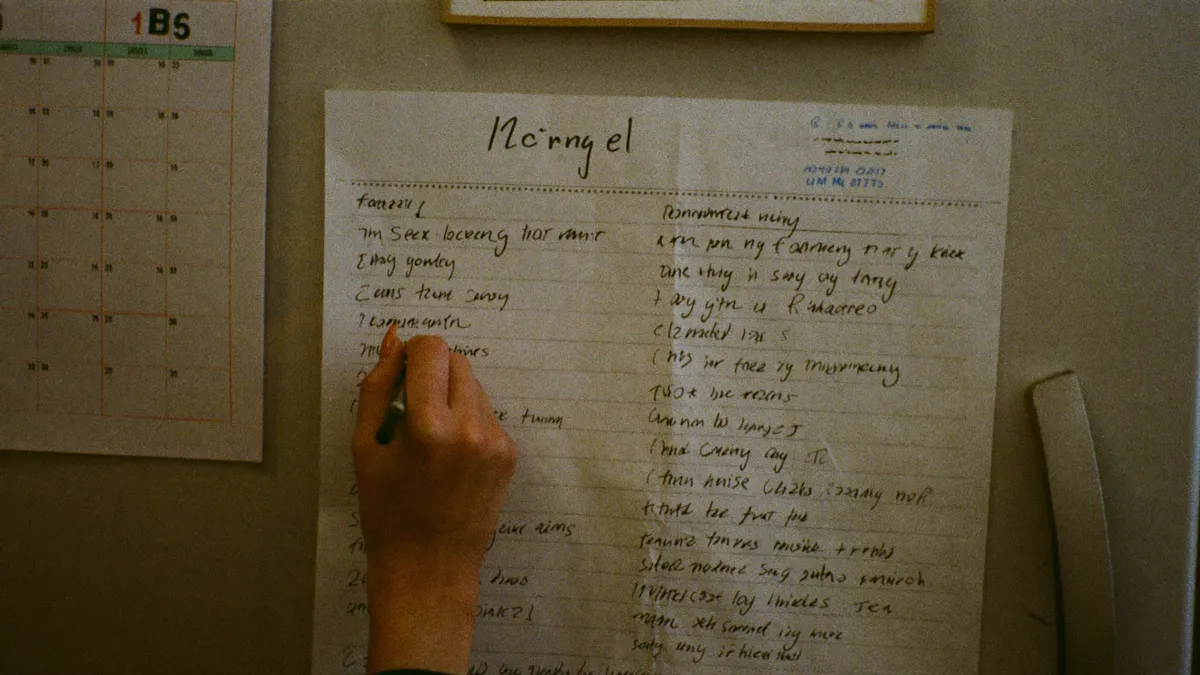
Write it down once, together. Much of the invisible load only becomes negotiable when it stops being invisible. Sitting down and listing every recurring thing you track, out loud, on paper, is often the first time a partner sees the actual size of it. You cannot fairly divide what only one person can see.
You are not imagining the weight
The tiredness is real. The load is real. Being impossible to see never made it weigh less; it made it heavier, because invisible work is the only kind you have to prove exists before anyone will help you carry it.
You have kept the whole household in your head for years so everyone else could move through their days without having to. It was never a personality trait. It was labor, and labor can be shared.
There is a name for the pattern that made you the one who carries everything, and a door out of it that is specific to you. The free Sacred Path quiz reads the pattern in two minutes and names it. Nobody needs anything from you there.
This article is for self-understanding, not medical advice. If the exhaustion has hardened into persistent low mood, please talk to a qualified professional.
Common questions
What is the invisible load?
It is the ongoing, unseen work of managing a household and the people in it: remembering appointments, tracking who needs what, planning ahead, and anticipating problems before they happen. Sociologists call the mental part the mental load and the feelings-management part emotional labor. It is real work, but because it happens in your head and leaves no visible trace, it is rarely recognized or shared.
Why do women carry the invisible load?
Not because they are wired for it. Research points to socialization: girls are raised to notice needs and keep the peace, and households default to the woman as the one who 'just knows' what needs doing. Over time she becomes the family's operating system, and everyone, including her, mistakes a learned role for a natural talent.
How do I explain the invisible load to my partner?
Make the invisible visible. Instead of asking for more help with tasks, name the management layer: not 'can you do the dishes' but 'I am the one who notices we are out of dishwasher tablets, adds it to a list, and remembers to buy it.' Hand over whole categories of responsibility, including the noticing and planning, not just the doing.
What does carrying the invisible load do to you?
Over time it produces a specific exhaustion: a mind that never fully clocks off, low-grade resentment, irritability, and trouble resting even when the visible chores are done. Studies link a heavy mental load to emotional exhaustion and sleep disruption. The tiredness is not laziness or fragility. It is the cost of running background processes no one can see.
If any of this felt like it was written about you, that is exactly what the free Sacred Path reading is for. It names your pattern and the doorway back to yourself.