In short
Eldest daughter syndrome is a popular term, not a clinical diagnosis, for the pattern that forms when the oldest girl in a family is given adult responsibility too early. Clinicians call the underlying dynamic parentification. She is praised for maturity, promoted to co-parent, and grows into the woman who carries everyone.
New here? The free Sacred Path quiz reads which of these patterns is running you, in about ninety seconds.
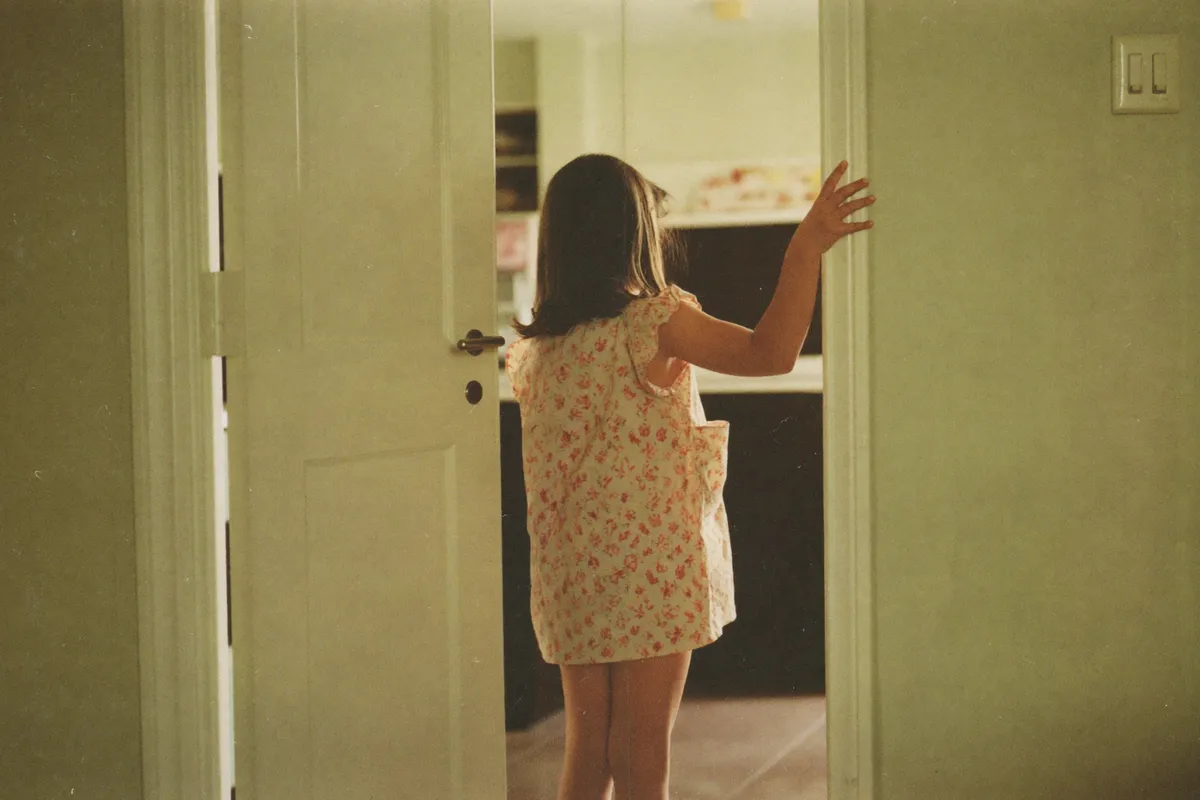
You were seven, maybe eight, when you learned to read a door. Not the door. The sound of it closing. How hard it shut told you what kind of evening the house was about to have, and whether you needed to get your brother into the other room before it started.
Nobody sat you down and gave you that job. You simply noticed that when you did it, things went better, and when you did not, they went worse. So you kept doing it. For years. Until it stopped being something you did and became something you were.
Everything written about the woman who carries everything describes her at forty-two. This is the piece about where she came from.
What is eldest daughter syndrome?
Eldest daughter syndrome is a popular term for what happens when the oldest girl in a family is given adult responsibility long before she is an adult. She minds younger siblings. She keeps the peace. She becomes the one a parent talks to about things a child should not have to hold. She is praised for being mature, and the praise is what makes the arrangement permanent.
It is not a condition she catches. It is a promotion she was never asked to accept and could not refuse. And unlike most promotions, nobody ever tells her when the shift ends.
Is eldest daughter syndrome a real diagnosis?
No, and this matters, because you deserve accurate information rather than a label that sounds official.
Eldest daughter syndrome is a cultural term, not a clinical one. It is not in the diagnostic manuals. No clinician diagnoses it, and there is no test for it.
What does exist in the clinical literature is parentification: a child taking on a parent's role. Therapists generally describe it in two forms. Instrumental parentification is the practical version, the cooking, the school runs, the managing of a younger sibling's homework. Emotional parentification is the heavier one, where the child becomes a parent's confidante, mediator, or emotional regulator.
Eldest daughter syndrome is, mostly, the everyday name for a girl who got both.
The absence of a diagnosis cuts one way only. It means there is no threshold you have to cross before what happened to you counts.
How a child gets made into the strong one
The mechanism is simpler and sadder than people expect. It runs on reward.
A young child does something capable. She calms the baby, she clears the plates, she tells her mother it will be alright. And the room changes. The tension drops. Someone says you are so grown up, and it is said with warmth, sometimes with relief, and she feels for one moment like the most useful person alive.
That is the whole transaction. Being needed felt like being loved, because in that house it functioned like being loved.
So she gave them more of it. And each time she did, two things happened at once: her competence grew, and her own needing got quieter. Not because it went away. Because there was no space in the house for two people to need something at the same time, and she had already worked out which one of them was going to be fine.
This is the same architecture the pillar guide describes in the strong one, only caught at the moment it is being built rather than decades later when the bill arrives.
What are the signs of eldest daughter syndrome?
Some of the signs are memories. Others are still happening this week.
In the childhood:
- You knew your parents' financial situation, or their marriage problems, at an age when you should have been thinking about lunch
- You managed a sibling's behaviour, homework, or feelings as though the outcome were your responsibility
- You could read the emotional temperature of a room before you walked all the way into it
- Being upset yourself felt like a poor use of the family's limited resources
- Adults described you as an old soul, mature, sensible, no trouble at all
In the woman:
- You cannot settle until everyone else is settled, and often not even then
- You feel responsible for other people's moods, as if they were weather you should have forecast
- Doing something purely for yourself carries a small tax of guilt
- You are the family's central switchboard, still, at forty-five
- Asking for help feels less like a request and more like a confession
The line from eight to forty-seven
Here is the part that tends to land hardest, because you can feel it in your body before you finish reading it.
The eight-year-old who watched her mother's face for weather is the forty-seven-year-old who reads every room before she speaks.
The girl who learned that the fastest way to end a bad evening was to handle it herself is the woman who cannot hand a task to her husband without redoing it. That is hyper-independence, and it did not begin with a disappointing partner. It began with a child concluding that relying on anyone was the riskier option.
The girl who kept her needs small so the household could stay level is the woman who apologises before she asks for anything at all. That is the fear of being a burden, which is not modesty. It is a very old calculation about how much room she is allowed to take up.
The girl who ran the mental inventory of everybody's schedules, moods, and unspoken requirements is the woman running the invisible load for a household of her own, wondering why she is so tired when nothing on the list looks heavy.
None of those are separate problems. They are one adaptation, still running, decades after the emergency it was built for.
Nobody in this story has to be a villain
This is the point where most articles on the subject turn on the family, and it is where we part company with them.
Your parents were probably not monsters. They were more likely young, stretched, grieving, ill, working two jobs, or simply raised in a decade that regarded a capable daughter as a blessing rather than a signal. Many of them were doing their genuine best with what they had.
And it still cost you something real.
Both of those sentences are true, and you are allowed to hold them at the same time. You do not have to indict anybody to acknowledge that a child carried more than a child should. The love in your family can be entirely real, and the arrangement can still have taken something from you that nobody noticed, least of all you.
Refusing the villain does not mean refusing the truth. It means telling it without needing someone to punish.
How do you heal from eldest daughter syndrome?
Not by resigning from your family. Not in one conversation. The role was assembled out of thousands of small repetitions, and it comes apart the same way.
- Name it once, out loud. To yourself, a friend, or a page. I was a child doing an adult's work. Most eldest daughters have never said that sentence, because saying it feels like complaining about a childhood that also had love in it.
- Separate the giving you chose from the giving you were assigned. Some of your care is genuinely yours and worth keeping. Some of it is a decades-old shift you never clocked out of. The two feel completely different in the body once you start checking.
- Let one thing stay undone. Something small. Let a sibling handle the birthday. Let the group chat go unanswered for a day. Notice the discomfort that arrives and let it be discomfort rather than an instruction.
- Ask for something, and let it be done imperfectly. You are not testing whether they can do it as well as you. You are testing an old belief that needing something makes you a problem. That belief only updates through evidence.
- Grieve the part that is actually gone. There was a version of your childhood that did not happen. That is a real loss and it deserves a real minute, not a brisk reframe about how it made you resilient.
And if the childhood role is still causing real distress, the low mood, the difficulty in relationships, the sense of being unable to stop, please talk to a therapist who works with family roles and parentification. This is well-trodden ground for them. You have carried it privately for long enough, and you of all people are allowed to be helped.
Where this leads
You were a good daughter. You were also a child, and children are not supposed to be the reason a house stays standing.
The competence you built back then is real and it is yours to keep. What you are entitled to now is the choice about when to use it, which is the one thing the eight-year-old never got.
There is a specific shape to how you became the one who holds everything, and it started somewhere particular in your story. The free Sacred Path quiz reads that pattern in two minutes and names it. It asks nothing of you. For once, the whole thing is for you.
This is reflection for self-understanding, not therapy, medical advice, or a diagnosis. Eldest daughter syndrome is not a clinical condition. If your childhood role is still causing real distress, a qualified therapist who works with family dynamics is the right support.
Common questions
What is eldest daughter syndrome?
Eldest daughter syndrome is a popular term for what happens when the oldest girl in a family takes on adult responsibility long before she is grown: managing siblings, absorbing a parent's feelings, keeping the household steady. She is usually praised for being mature, which quietly makes the role permanent. The competence stays with her for life, and so does the difficulty putting it down.
Is eldest daughter syndrome a real diagnosis?
No. It is a cultural term, not a clinical one. It does not appear in the diagnostic manuals and no clinician diagnoses it. The related concept in the clinical literature is parentification, meaning a child taking on a parent's practical or emotional role. The lack of a medical label does not make the experience less real, and it does not mean it is too small to take seriously.
What are the signs of eldest daughter syndrome?
Common signs include being unable to relax until everyone else is settled, feeling responsible for other people's moods, guilt when you do something purely for yourself, difficulty asking for help, a reflex to fix problems before anyone has voiced them, and a lifelong habit of scanning rooms for tension. Many eldest daughters also report feeling closer to a co-parent than a sibling to their brothers and sisters.
How do you heal from eldest daughter syndrome?
Slowly, and in small repetitions rather than one decision. It helps to name the role out loud, to let low-stakes things stay undone, to practise asking for something small and letting someone else deliver it imperfectly, and to separate what you genuinely want to give from what you were assigned. If the childhood role is still causing real distress, a therapist who works with family roles and parentification is the right kind of support.
If any of this felt like it was written about you, that is exactly what the free Sacred Path reading is for. It names your pattern and the doorway back to yourself.