In short
Feeling responsible for everyone is the habit of treating other people's moods as something you produce and therefore owe. Someone goes quiet and you assume a debt. It is usually learned in a house where reading the mood early kept things calm, and it turns ordinary care into a job with no hours.
New here? The free Sacred Path quiz reads which of these patterns is running you, in about ninety seconds.
Your sister is quieter than usual on the phone. You hang up and run the last ten minutes again, looking for the sentence that did it.
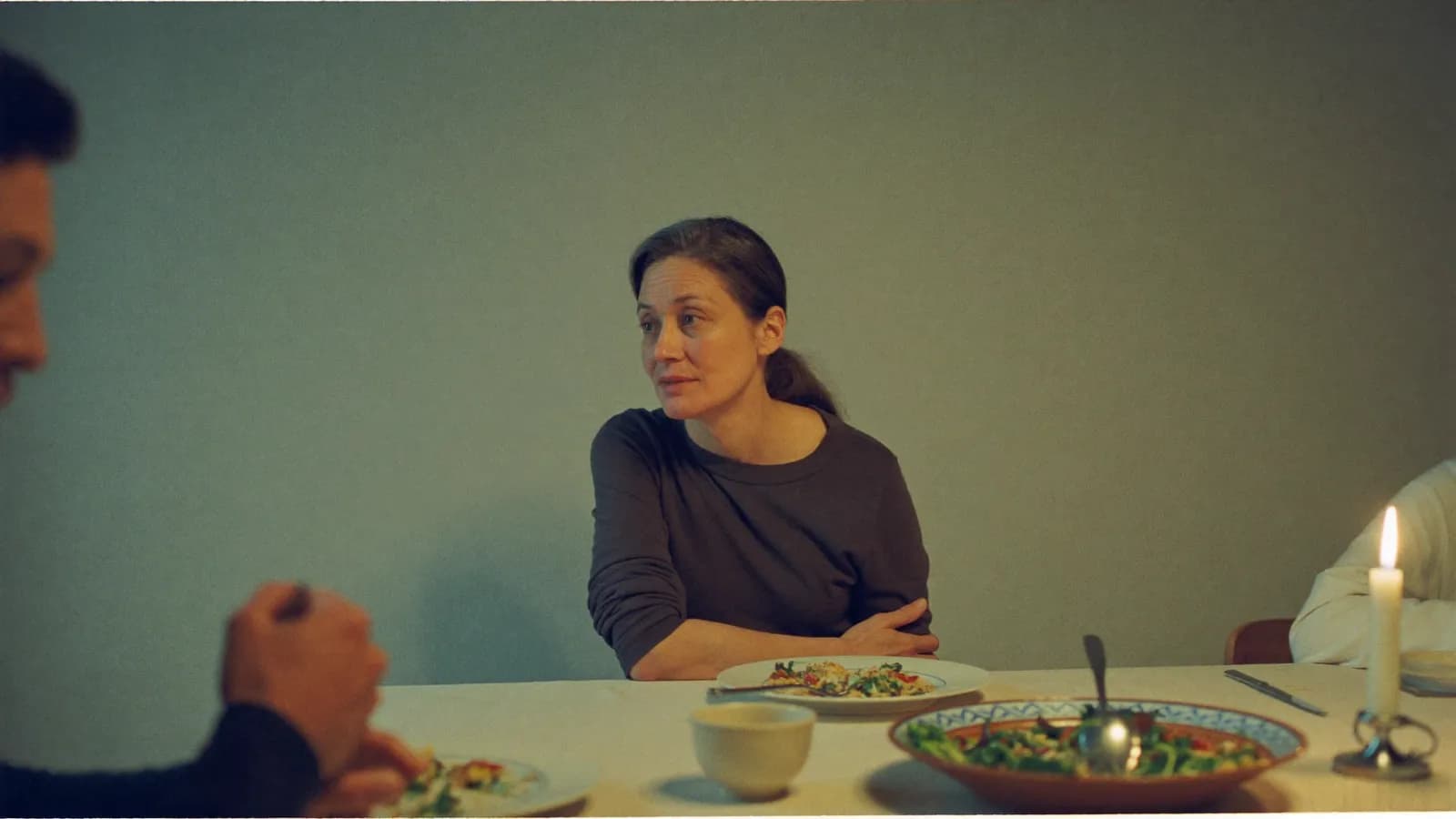
Your husband comes in heavy from work, and before you have asked a single question you have redrafted the same text to your mother four times. Somebody at the table is not enjoying themselves, and you feel it land in your chest like a bill.
Nobody asked you to do any of this. You have been doing it since long before anybody asked you to.
What does feeling responsible for everyone actually mean?
Feeling responsible for everyone, sometimes called hyper-responsibility, means treating other people's moods as something you produce and therefore owe.
Plenty of people notice when somebody near them is flat. The difference here is what happens in the next second. You do not simply observe the mood. You assume a debt, and then you start paying it: the extra question, the lighter tone, the plan quietly rearranged so a person who never complained might feel better.
It feels like being considerate. It functions like unpaid, unlimited, on-call work.
Why do I feel responsible for everyone's happiness?
Because it was once useful: in a house where one person's mood set the temperature, reading that mood early kept things calm.
Noticing the car door, or the particular quality of a silence, gave you a few minutes to get ahead of it. A child in that house is not being anxious. She is being accurate.
What makes it stick is that it worked, and that it got praised. You were sensitive, and mature for your age. Nobody says out loud that a nine-year-old is running the emotional maintenance of a household. The longer version of that childhood is in eldest daughter syndrome.
Then adulthood kept rewarding it. Being the person who manages the atmosphere makes you valuable at work and indispensable at home. The role deepened because you were good at it, which is the mechanism underneath the strong one.

What it looks like day to day
It shows up as small corrections you make to other people's moods, all day, without being asked. Each one is easy to defend on its own.
- You apologise for the traffic, the rain, and other people's decisions
- You brief yourself before family events on who needs watching
- You feel personally responsible when two other adults are not getting on
- You offer solutions to problems nobody brought to you
- Somebody says "I'm fine" in a flat voice and you treat it as a task
The constant scanning behind all of it has its own name and its own guide in hypervigilance.
Is it empathy or over-responsibility?
Empathy notices. Over-responsibility assumes authorship.
| Empathy | Over-responsibility | |
|---|---|---|
| What it does | Registers how somebody feels | Assumes you caused it |
| What it asks of you | Presence | Repair, immediately |
| Can you sit with their bad mood? | Yes | No, it feels unbearable |
| Whose feeling is it? | Theirs | Theirs, felt as yours |
| How it ends | When they feel understood | When they feel better, or never |
The third row is the one that settles it. If you can be near somebody's disappointment without needing to fix it, that is empathy and it is one of the best things about you. If their flat Tuesday afternoon feels like an accusation, something has crossed over.
That crossing is also where the resentment starts, because work nobody asked for is work nobody thanks you for. That is the territory of the resentment of being needed.
What it costs
You cannot accept a gift. If their good mood is partly your work, their kindness arrives looking like a receipt. Being given something freely is hard to take when you believe you are the one keeping the books.
You get the blame for the weather. If you are responsible for everyone's mood, then every bad mood in the house is, by your own arithmetic, a failure of yours. It is a contract nobody offered you, and nobody else signed.
Your own state goes unread. All that attention points outward. Asked what you need, you reach for the information and find nothing there, which is the habit covered in self-abandonment.
When this needs a professional rather than a reflection
For many women this is a learned habit. Sometimes it is a symptom, and that distinction matters.
It is sometimes described as a trauma response, and for some women it is: a reflex learned in a home where somebody's reaction was genuinely dangerous to get wrong. For others it is simply the role of the capable one, rehearsed for thirty years. Both are worth taking seriously, and neither is diagnosed from a blog post.
The NHS notes that people who are "generally quite anxious or have a very strong sense of responsibility for themselves and others" are among those who may be more likely to develop obsessive compulsive disorder. OCD is treatable, and treatment works well for many people.
Speak to a doctor if the responsibility arrives as intrusive thoughts you cannot dismiss, if it drives repeated checking or asking for reassurance, if it brings dread that something terrible will be your fault, or if it has started to shape your days around preventing imagined harm. If that is what is happening, it is a treatable pattern and worth naming to a doctor.
How do you stop feeling responsible for everyone?
You stop by separating the noticing from the owning, two things that have been fused together for decades.
- Keep the noticing. Drop the owning. You are not trying to become less perceptive. Practise the second half silently: she is in a mood, it is real, it is hers, it does not need me. Naming it interrupts the automatic move into repair.
- Ask instead of assuming. "You seem a bit quiet, are you all right?" costs ten seconds and often ends an hour of private analysis. You are frequently wrong about the cause, and being wrong is good news.
- Give it twenty-four hours. When you catch yourself planning to fix a mood you did not cause, put a day between the noticing and the doing. Most of those moods resolve themselves, and you find out which ones were never yours.
- Hand back the chores that came with the role. The managing of moods usually travels with the managing of logistics, and that part is negotiable. The mechanics are in emotional labor in a relationship.
- Expect to feel selfish. Stepping back from a job nobody assigned will feel like neglect long before anybody else notices a change. That feeling is withdrawal, not evidence.
What is actually yours
Your behaviour. Your choices. What you say, and how you treat people. That is the whole list, and it is enough work for a lifetime.
Their mood on a Tuesday is not on it. Neither is their marriage, their job, their disappointment, or the atmosphere at a dinner you did not organise. Those belong to adults who are allowed to have a difficult week without it being a reflection on you.
The relief, when it comes, is specific: you can be in a room with somebody who is unhappy and stay yourself. You can still care. You are simply no longer the department responsible.
The habit of carrying everyone else's moods usually began long before this family. The free Sacred Path quiz names the pattern underneath it in about ninety seconds, and nobody there needs anything from you.
This is reflection for self-understanding, not therapy, medical advice, or a diagnosis. A constant or intrusive sense of responsibility can be part of conditions a professional can treat, including anxiety disorders and OCD. Please take that to a doctor rather than working it out alone.
Common questions
Why do I feel responsible for everyone's happiness?
Usually because it was once useful. In a house where somebody's mood set the weather, a child who noticed early and smoothed things over made life safer. That reflex does not switch off when you grow up. It keeps reading rooms and keeps assuming that a flat mood nearby is a problem you caused and must fix.
What is the difference between empathy and over-responsibility?
Empathy notices how somebody feels. Over-responsibility assumes you caused it and must fix it. Empathy can sit beside a friend in a bad week without needing to repair her. Over-responsibility cannot rest until the mood changes, and treats her ordinary sadness as evidence of your failure.
Is feeling responsible for everyone a trauma response?
It can be, though not always. It is often a learned pattern from an unpredictable home, and it also appears in people who simply had the role of the capable one. It is worth taking to a professional if the sense of responsibility is constant, intrusive, or comes with checking and reassurance-seeking you cannot interrupt.
How do I stop feeling responsible for everyone?
Start by separating the noticing from the owning, because the noticing is a skill worth keeping. Practise saying silently that a mood is real, is not yours, and does not require an action from you. Then leave one small thing unfixed and let it be uncomfortable. The reflex weakens through repetition rather than insight.
If any of this felt like it was written about you, that is exactly what the free Sacred Path reading is for. It names your pattern and the doorway back to yourself.