In short
You resent your husband because resentment measures imbalance, not wrongdoing. In marriages where the woman carries most of the invisible work, it builds from being the one who notices everything and is thanked for nothing. It is information about the arrangement, and it says almost nothing about whether he is a good man.
New here? The free Sacred Path quiz reads which of these patterns is running you, in about ninety seconds.
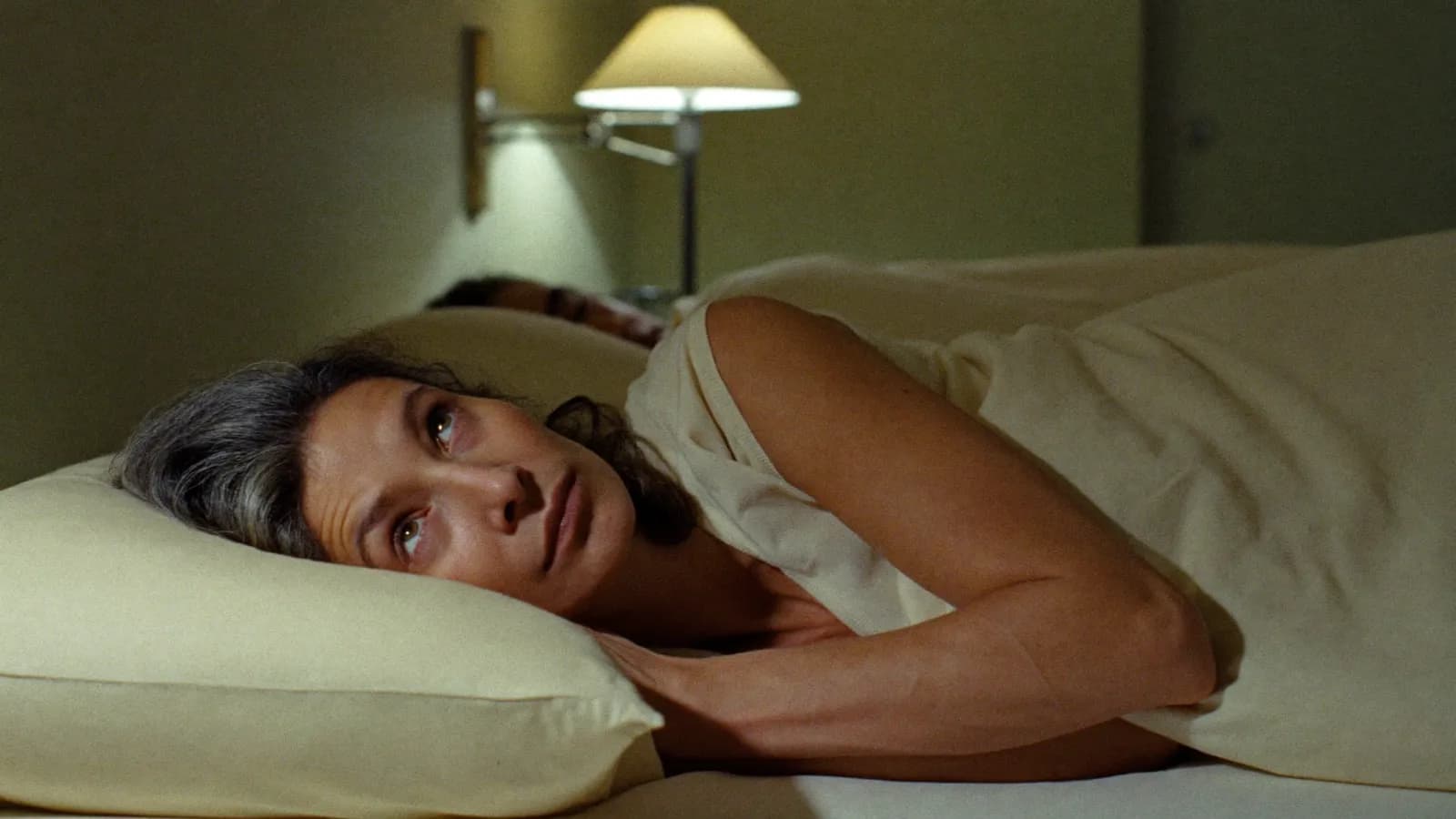
He is asleep. You are not.
He asked, earlier, whether you had booked the thing, and you said yes, because of course you had, and something in you went hard and flat in a way you did not have a word for. He may not have done anything you could name. He would say, without hesitating, that he is lucky.
And you are lying there at half past eleven with a feeling you would be embarrassed to say out loud: that you resent your husband, and you cannot point at why.
Why do I resent my husband when he has not done anything wrong?
Because resentment does not measure wrongdoing. It measures imbalance.
It is an accurate instrument for one specific thing: the distance between what you give and what you get back, and whether that distance has ever been acknowledged. It has almost nothing to say about whether he is a good man, and nothing at all about whether you love him.
This is why the feeling is so confusing. You go looking for a crime to explain it. There usually is not one. There is a long accumulation of things that never got said, and resentment is the part of you that kept the tally while the rest of you was being reasonable.
One thing before anything else. This article is about imbalance between two people who broadly mean well. If you are frightened of your partner, monitored, or controlled, that is a different situation, it does not respond to better communication, and the support for it is further down this page.
What is resentment in a marriage actually made of?
Asked directly, the first answer is usually almost nothing. A tone. A Tuesday.
Push a little and it is rarely the incident. It is the category the incident belongs to.
- Being the one who notices. He does what he is asked. You are the one who knows what needs asking. That gap is the invisible load, and it is exhausting in a way that is hard to point at.
- Being thanked for the wrong things. He thanks you for dinner. Nobody thanks you for knowing the shoe sizes and the vaccination dates.
- Asking, and it becoming a favour. The moment help has to be requested, you are the manager and he is the helper, and you are still holding the thing.
- The feelings work. Managing his mood, smoothing his family, being the one who repairs after an argument. That has its own name, in emotional labour in a relationship.
- The comparison you try not to make. He rests without checking whether he has earned it. You have not done that since 2011.
None of those is a betrayal. All of them are real, and they add up.
Why does resentment hit capable women hardest?
You are competent. You always were. So the household organised itself around your competence, the way water finds the lowest point, and it did so without anybody deciding anything.
Two things followed. Because you did it well, nobody registered it as work. Efficiency is invisible; only struggle is visible. And because it was never named as too much, there was no evidence that it was.
Two things are true here, and only one of them is about fault. He did not look hard enough. And the work itself was built to be unseeable, over years when nobody, including you, was calling it work.
That second part is not an accusation. It is the opening. Fault is a closed loop with nothing to do inside it. An arrangement that nobody consciously chose can be renegotiated by the people living in it.
If the pattern predates the marriage, and it often does, the strong one is the longer version of where it started.
Is it normal to feel resentment in a marriage?
Common, particularly in the decade when work, children and aging parents overlap. That is not the same as harmless.
What matters is what resentment turns into when it is left alone. It curdles into contempt: the eye-roll, the sharp little joke at his expense in front of friends, the sense that he is faintly ridiculous. In John Gottman's research on married couples, contempt was the strongest single predictor of divorce.
So the goal was never to feel none of it. The goal is to say it while it is still the smaller thing.
How do you stop resenting your husband?
Deciding to feel differently does not work. Resentment ignores instruction.
- Name the specific, not the general. "I resent you" is unusable. "I have booked every appointment in this house for eleven years and I would like that to be shared" is something a person can respond to. The feeling is vague and enormous from the inside and almost always attached to something concrete and repeated.
- Say it early, at low volume. The usual pattern is to wait until you cannot hold it any more, which means the first time he hears about the imbalance is at maximum intensity, and the conversation becomes about how it was said. Say the small version on a Tuesday.
- Move the noticing, not the task. "Can you do the dentist" leaves you the manager. Whole categories are what actually transfer, and the mechanics of that are worked through properly in the invisible load.
- Separate the three piles. What belongs to him, what belongs to an arrangement neither of you chose, and what belongs to a decision you made in your twenties without examining it. Only the first is his to answer for, and it is usually the smallest.
- Consider a third person in the room. Couples counselling does its best work years before anybody is thinking about divorce. One exception, and it matters: it is not the right room if you are frightened of your partner. The next section is about that.
When it is not imbalance: resentment vs coercive control
Everything above assumes two people who broadly mean well and an arrangement that grew without anybody choosing it.
If what you are living with involves being frightened, monitored, controlled, isolated from people, having money withheld, or being made to doubt your own memory of events, that is a different situation. It does not respond to better communication, and joint counselling can make it more dangerous rather than less.
If you are in immediate danger, call 999 in the UK or 911 in the US.
Otherwise: the National Domestic Abuse Helpline in the UK is 0808 2000 247, free, confidential and open 24 hours, run by Refuge. In the US, the National Domestic Violence Hotline is 1-800-799-7233, and if a call is not possible you can text START to 88788, though it is worth clearing those messages afterwards if your phone is shared or monitored. Both will talk to you about a situation you are not sure how to name, and neither will tell you what to do.
Where this leaves you
Resentment on its own is not evidence that you married the wrong man. It is not evidence that you married the right one either. It is evidence that you have been carrying something uncounted, and that some part of you has been keeping accurate records the whole time.
That part deserves a hearing rather than another decade of being talked out of it. What it is mostly asking for is to be seen doing the thing you have been doing invisibly since before the children could walk. What you decide after that is yours, and it is a great deal easier to decide with the arithmetic said out loud.
The habit of carrying it quietly started long before this marriage. The free Sacred Path quiz reads the pattern underneath it in about two minutes.
This is reflection for self-understanding, not therapy, couples counselling, or relationship advice for your specific situation. If you feel controlled, frightened, or unsafe with your partner, that is a different situation than the one described here. Support is listed inside the article.
Common questions
Why do I resent my husband when he has not done anything wrong?
Because resentment responds to imbalance, not to wrongdoing. If you are the one who holds the calendar, the appointments, the emotional temperature of the house and the plan for the weekend, the load is real even when nobody has behaved badly. Resentment is often the first part of you that notices what you have been absorbing without comment.
Is it normal to feel resentment in a marriage?
Common, particularly in the decade when work, children and aging parents overlap. Common does not mean harmless. Unspoken resentment tends to harden into contempt, and in John Gottman's research on married couples, contempt was the strongest single predictor of divorce. The point was never to feel none of it. It is to say it while it is still resentment.
How do I stop resenting my husband?
Start by naming the specific thing instead of the general feeling. Resentment sounds enormous and vague from the inside and almost always turns out to be attached to something concrete and repeated. Say one of those out loud, early, before it has accumulated. That usually feels far more dangerous than continuing to absorb it, which is why the absorbing tends to win.
Why am I so angry at my husband all the time?
Anger that arrives out of proportion to the trigger is usually about the accumulation rather than the incident. It is worth separating what belongs to him, what belongs to an arrangement neither of you consciously chose, and what belongs to a decision you made in your twenties and have never revisited. Those three need different responses, and only the first is his to answer for.
If any of this felt like it was written about you, that is exactly what the free Sacred Path reading is for. It names your pattern and the doorway back to yourself.