In short
Making friends in midlife is hard because adult friendship needs three things this stage of life removes: unplanned shared time, repeated contact over months, and a willingness to be seen before you have it together. For the woman everyone relies on, the third is the real barrier. She has people. She has no one who asks how she is.
New here? The free Sacred Path quiz reads which of these patterns is running you, in about ninety seconds.
Making friends in midlife is hard for everyone, and it is a particular kind of hard for the woman everybody leans on. She is not short of people. Her phone goes all day. What she does not have is one name she could ring at eleven at night for no reason at all.
Most of the advice does not know she exists. Join a club. Take a class. Say yes to more invitations. All of it is written for a woman who is short of people. She is surrounded by them, and still uncontained.
If you are the one everyone calls and you have quietly noticed you have nobody to call back, this is about that. Not the pottery class.
Why is it so hard to make friends in midlife?
Adult friendship needs three conditions, and midlife removes all three.
The first is proximity: being in the same place as the same people without arranging it. The second is repetition: that happening again and again over months, which is how strangers become familiar without anyone deciding to. The third is a willingness to be seen before you are impressive.
School and university handed you the first two for free. Work sometimes does, until it stops, or until you become senior enough that everyone reads you as management. Then children arrive and friendship becomes logistics: two women trying to find a Thursday, cancelling it twice, meaning it both times.
That is the honest general answer to why is it so hard to make friends after 40, and every article on the subject covers it. The structural part is real. It also lets you off a little too lightly.
Because the third condition is the one you removed yourself. Years ago. Without noticing.
What happens when every friendship runs one way?
It is possible to be woven into a dozen lives and be alone inside every one of them.
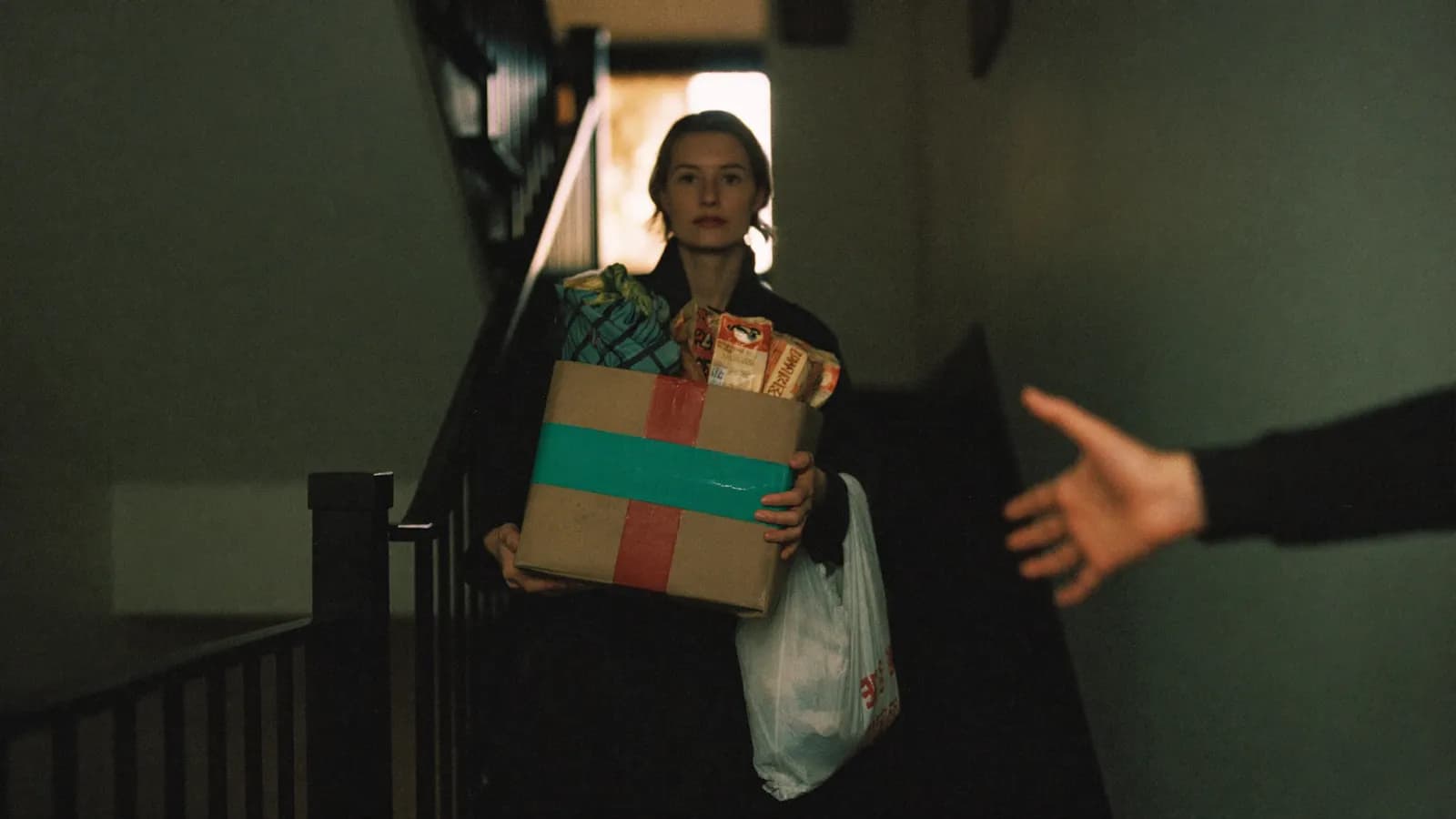
You organised the funeral. You are the friend who drives to the airport before six in the morning without being asked twice. When the scan comes back, when the marriage cracks, when a child stops eating, yours is the number people find first. You are exceptional at this, and you have been doing it for twenty-five years.
Now try it the other way round. Something goes wrong on a Tuesday afternoon. Nothing dramatic. A letter, a result, a sentence somebody said in passing that has not stopped repeating. You open your contacts to find one person to tell. Watch what happens. You scroll past the first name, thinking, she has enough on. Past the second: we are not really at that stage. You put the phone face down on the kitchen counter and handle it yourself, the way you always do, and by six it is handled and nobody ever knew.
That is not an absence of friends. It is a social world built entirely in one direction.
The pattern behind it is always the strong one: the role assigned early and rehearsed for so long that it stopped feeling like a role. Its cost shows up in your body and your calendar. It also shows up here, in the shape of your friendships, which is where it is hardest to see because from the outside they look plentiful.
Is it normal to lose friends in your 40s?
Yes, and more common than anyone says out loud. The forties tend to be a decade of friendship attrition rather than accumulation, and most women who describe losing friends in midlife are describing something ordinary.
People move for work. Marriages end and the friendship goes with the couple. A parent gets ill and two years disappear. Some friendships turn out to have belonged to a phase of life rather than to you, and when the phase ends there is nothing underneath. The school-gate friendships are the clearest case: intense, daily, genuinely warm, and gone within a year of the last drop-off.
There is also the culling. Somewhere in this decade, a lot of women quietly stop maintaining relationships that cost more than they return. That is not a loss. That is discernment arriving on time.
But there is a version of losing friends specific to you, and it is worth being straight about it. Friendships built on you being useful do not survive you needing something. When you finally arrive at one of them with an actual need, unfinished and unmanaged, you often find the structure was not built to hold weight in that direction. Sometimes she goes quiet. Sometimes she gets brisk and practical and starts suggesting things. Occasionally she is entirely willing, and you are the one who cannot bring yourself to keep talking.
Then the story writes itself: see, nobody was coming. Except the arrangement was yours. You trained everyone in it, for decades, without meaning to.

Why do I feel lonely even though I am surrounded by people?
Because being needed is not being known, and only one of them is nourishing.
Being needed feels like closeness. It has all the traffic of closeness: the messages, the meet-ups, the sense of mattering. Which is why this loneliness is so disorienting. You cannot point to the empty part. On paper you have a marriage, children, colleagues, a group chat, a sister who rings every Sunday. Nothing is missing that you could name at a dinner party.
What is missing is the question. Nobody asks how you actually are, because you have made it clear over many years that the question is not necessary. You answer "fine" before you have checked. You mention hard things only in the past tense, tidied, resolved, requiring nothing from the listener. You are the safest person in the room to talk to and the least likely to be talked to.
Underneath that is hyper-independence, the part of you that cannot let anyone close enough to carry anything. It usually gets described in terms of refusing help with the shopping, the lift, the loan. Its real cost is social. A woman who never lets anyone do anything for her ends up with people who love her and cannot reach her, and eventually they stop offering, because nobody keeps knocking on a door that has never once opened.
So the loneliness was never proof that nobody loved you. It is the armour, doing precisely what you built it to do.
How do you make real friends as an adult?
Not at events. The standard advice treats this as a problem of access, of getting yourself into more rooms. Access has never been your issue. You need the same room, repeatedly, plus somebody willing to move things past the pleasant surface. Usually you.
Pick repetition over novelty. One thing, same night, same faces, weekly, for half a year. A walking group, a choir, a class you would not have chosen. What it is matters far less than that it recurs. Familiarity does the work here, and familiarity only comes from turning up again when you would rather not.
Go first, and expect it to feel undignified. Somebody has to say "shall we get coffee after". That somebody will have to be you more often than feels fair. It will feel like imposing. Mostly it is the plain sensation of doing something you have never practised.
Say one true, unresolved thing. Not the whole history. One current, unfinished sentence, given to somebody who has earned a little trust. "Honestly, this year has been hard." Then stop talking and let it sit there in the air between you. Closeness moves both ways or it does not move, and you have spent your life on the receiving end of everyone else's telling. Being seen mid-difficulty is the muscle the role let wither, which is why learning to receive tends to come before any of this gets easier.
Ask somebody for something small. A lift. A recommendation. Ten minutes of her opinion on something you are stuck on. Easy enough to refuse, real enough to count. Being asked is how people come to feel close to you, and you have been quietly denying everyone that for years, out of politeness.
Stop auditioning. The competent, sorted, low-maintenance version of you is the one people rely on. Nobody has ever felt close to somebody who has it all handled.
Give it a year, not a month. Adult friendship builds on a far slower clock than anyone expects. Most people quit somewhere in the middle of that year, decide the whole thing does not work, and go back to being busy. It does tend to work. It is just slow, and it never announces itself while it is happening.
What if it is heavier than this?
There is a version of this that reflection does not reach. If the loneliness has been constant rather than situational, if it comes with a flatness that has not lifted in weeks, if it is touching your sleep or your appetite or your interest in things that used to matter, that deserves proper support rather than another article.
Loneliness is not a character weakness, and taking it to your doctor or a qualified therapist is not an admission that you have failed at something. It is one of the more sensible things the capable one can do. Say it out loud, once, to somebody whose actual job is to listen.
Where this leads
The friendships you want are not going to arrive through better logistics. They will arrive through the thing you are worst at: being the one who needs something, going first, being seen before you are finished.
That is not a small ask. You spent a lifetime making sure nobody ever had to worry about you. It worked. And now the same skill stands between you and the one thing likely to help.
There is a pattern to how you became the one everyone leans on, and to which part of it is costing you most right now. The free Sacred Path quiz reads that pattern in two minutes and names where your particular door has been stuck. Nobody needs anything from you there. For once the whole thing is for you.
This article is for reflection and self-understanding, not therapy or medical advice. Loneliness can be heavy and it can sit alongside low mood. If it has been persistent, or it is affecting your sleep, appetite or interest in things, please talk to a doctor or a qualified therapist.
Common questions
Why is it so hard to make friends in midlife?
Because the conditions that made friendship easy earlier have quietly gone. Adult friendship needs proximity, unplanned repetition, and some willingness to be seen unfinished. Work, children, caregiving and moves take out the first two. The third is often the harder one: by midlife most of us have decades of practice being the competent version of ourselves, and competence is not what makes people close.
Is it normal to lose friends in your 40s?
Yes, and more common than anyone says out loud. The forties tend to be a decade of friendship attrition rather than growth: people move, relationships end, caregiving swallows free time, and some friendships turn out to have belonged to a season rather than to you. Many women also do a quiet culling of their own around now. Losing friends in midlife is not usually a sign that something is wrong with you.
How do you make real friends as an adult?
Through repetition and going first, not through events. Real friendship in adulthood tends to need the same person seen regularly over months, plus somebody willing to move things past the pleasant surface. That means naming something true before it is resolved, asking for something small, and tolerating the awkwardness of being the one who initiates. It is slower and less dignified than the advice suggests, and it tends to be what actually works.
Why do I feel lonely even though I am surrounded by people?
Because being needed and being known are not the same thing. You can have a full calendar, a family, colleagues who rely on you, and still have nobody who asks how you actually are and waits for the answer. That is a specific kind of midlife loneliness, and it is common among women who have spent decades as the capable one. The problem is not the number of people. It is the direction the care flows.
If any of this felt like it was written about you, that is exactly what the free Sacred Path reading is for. It names your pattern and the doorway back to yourself.