In short
Women commonly report feeling invisible in midlife because a culture that valued them for youth and usefulness quietly stops looking. The shop assistant serves the person behind her. Her point in the meeting is repeated by someone else and heard. For women who were only ever seen as useful, the fading feels less like a new wound than a confirmation.
New here? The free Sacred Path quiz reads which of these patterns is running you, in about ninety seconds.
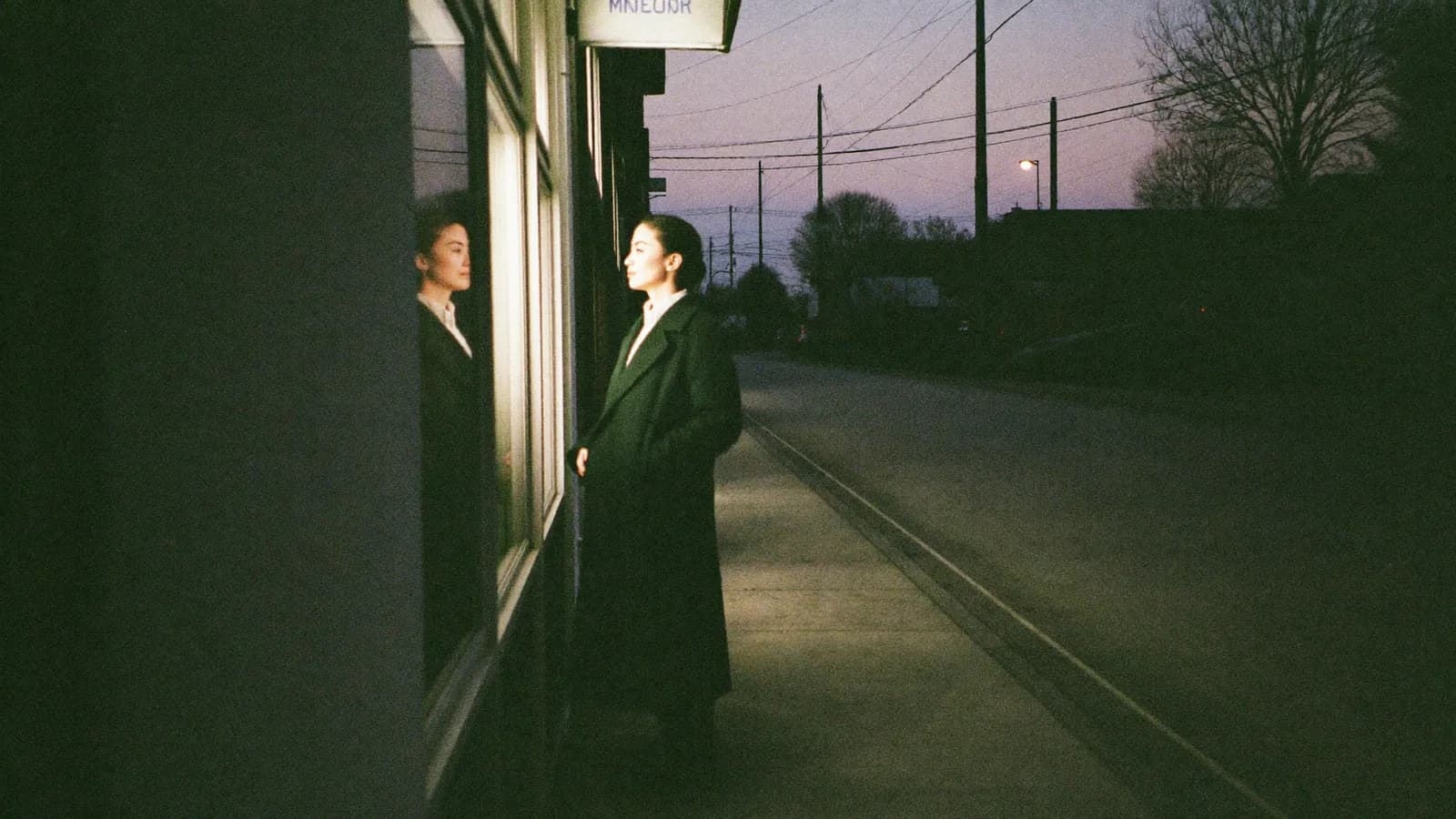
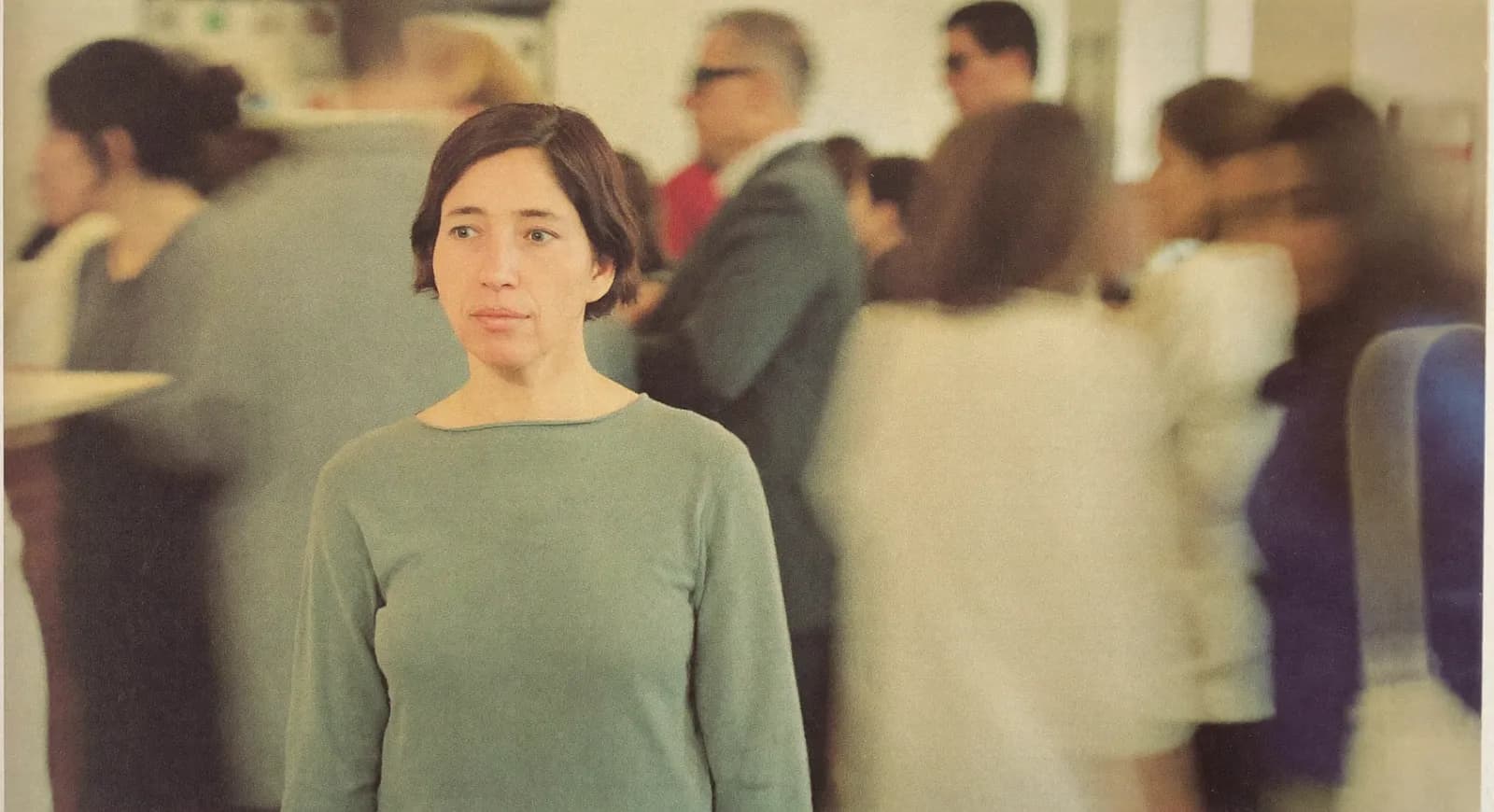
Feeling invisible in midlife starts somewhere small and stupid. A counter. A queue. You are next, and the assistant looks straight through the space where you are standing and says "who's next" to the woman behind you, and she answers, and it is handled, and you say nothing because what is there to say.
You go home and you do not mention it. It is too small to mention. It is also the fourth time this month.
That is how it arrives. A slow withdrawal of other people's eyes, one counter at a time.
Why do women feel invisible in midlife?
Because the looking was always conditional, and midlife withdraws the conditions.
For twenty-odd years you were looked at for being young, for being decorative, and for being useful. Nobody said that out loud. It was simply the weather you moved through, and like all weather you stopped noticing it until it changed.
Then somewhere around forty the first two go. There is no birthday for it. It comes in fragments. The builder addresses your husband. The man at the bar looks past your shoulder mid-sentence. You say the thing in the meeting. Eleven minutes later a colleague says the same thing and the room turns toward him with interest.
Each of those is small enough to be denied, which is the specific cruelty of becoming invisible after 40. There is never a moment big enough to point at. There is an accumulating quiet, and a suspicion that you are being oversensitive about a thing that is also happening.
You are not oversensitive. The room changed. You just cannot prove it in any given instance.
What is invisible woman syndrome?
Invisible woman syndrome is a popular term, not a medical one. No clinician diagnoses it. It does not appear in the manuals. It is a phrase women invented because they needed a name for something everybody noticed and nobody named.
Worth saying plainly, because the word "syndrome" does its usual damage: it makes an ordinary social experience sound like a personal malfunction, and invites you to check whether you qualify before you are allowed to feel it. You do not have to qualify. What it describes is real whether or not it has a label: a sustained, sourceless sense of being looked past by a world that used to look.
The part almost nobody says out loud
Everything above is the version most women get told. Under it sits a second layer, and for you it is the one that stings.
Most pieces on feeling unseen in midlife treat it as a loss of attention. Something you had, and now do not. That framing holds only if the attention was ever about you in the first place. For a certain kind of woman it never was.
If you have spent your life as the capable one, think honestly about what people were looking at all those years. They were looking at what you could carry. The remembering of birthdays. The smoothing over at Christmas. The fixing of things before anyone noticed there was anything to fix. You were highly visible in the way a load-bearing wall is visible, which is to say relied on constantly and looked at never.
So when the culture's gaze withdraws at forty-five, it does not land as a new injury. It lands as a confirmation of something you already half suspected: that you were never seen, only used well. Usefulness was the price of admission, and you paid it so early and so willingly that you forgot there had been a transaction at all.
That is why the hurt surprises you. Vanity would be simpler, and easier to talk yourself out of. This is an old question finally getting its answer, and the answer is the one you feared.
The pattern underneath it has a name and a history, and if that paragraph landed somewhere hard, always the strong one is the fuller map of how you got here.
Is feeling invisible in midlife normal?
Common, yes. Many women describe some version of it, and the recognition tends to be instant when one of them finally says it out loud in a room of others.
But normal is a word people use to close a conversation, and it should not close this one. All it proves is that you are not imagining things. Nobody attached an instruction to be graceful about it.
There is grief here, and it deserves its full size before anybody offers you a reframe. Something is ending: a currency you did not know you were spending, a way of moving through the world where doors opened slightly before you reached them. You are allowed to be sad about losing it, even if you never approved of the currency.
Under the grief, usually, sits anger. Anger that the terms were never disclosed, that the culture asks a woman to be decorative for two decades and then revokes the contract without ceremony and calls her bitter if she mentions it.
The anger is accurate. It is a response to something that happened, and it carries information: it tells you what you agreed to without ever being asked.
Why do I feel invisible at 45 when nothing else has changed?
Because the invisibility rarely arrives alone.
It lands in the same few years as everything else. The body changes shape and temperature. Sleep goes unreliable at three in the morning. Children need you differently, or not at all, and a career you finally got good at flattens out. Underneath all of it runs the disorienting business of no longer recognizing your own life, which has its own shape in midlife identity crisis.
Unseen from the outside and unfamiliar from the inside at the same time is a particular vertigo. The mirror is strange, the room is not looking, and it is hard to tell which one started it.
They are separate problems, and it helps to keep them separate. One is about how you are being looked at. The other is about who is doing the living.
How do you stop feeling invisible?
Carefully, and not by chasing the gaze.
The most available advice is some version of be more visible: dress differently, speak louder, get in front of more rooms. Some of it works for an afternoon. All of it leaves the power where it was, with whoever decides what is worth looking at. Performing harder for a jury that already returned its verdict is a tiring way to spend your fifties.
What shifts it is smaller and much less satisfying.
Notice where your own attention lives. Track it honestly for a week. Most women who feel unseen find their attention has been pointed outward for twenty years, at what the family needs, what the room needs, what is about to go wrong. You cannot be a person nobody looks at and also never look at yourself. One of those you have some say in.
Separate being seen from being looked at. Being looked at is a stranger doing an assessment. Being seen is one person knowing what your week has really been like. Lose the first entirely and you can still be starving for want of the second.
Let one person see you unfinished. The hard one. Not the competent version, and not the resolved anecdote told safely in the past tense. One current, unmanaged, unimpressive truth, said out loud to somebody who has earned it. It will feel enormous, because you have not done it in years.
Take up ordinary space without the apology. Say the thing again when you get spoken over, same tone, no softening preamble. Occupy the seat. Order what you want. None of it is a stand. Repetition is how a body learns anything, including this.
Stop auditioning for usefulness. When the looking stops, the reflex is to become more helpful. To make yourself necessary somewhere new, because necessary at least gets noticed. Watch for that move. It is the old arrangement reassembling itself, at the same price you have always paid.
The tidy ending, and why it is not quite true
Someone well meaning will tell you, eventually, that invisibility is freedom. That nobody watching means nobody judging.
There is something in it. Women a few years further on do describe a lightness in not being looked at. What strangers think of your upper arms stops being a daily expense.
But it arrives as a byproduct, not as a consolation, and offering it too early is another way of asking a woman to be gracious about a loss. You do not get the lightness by agreeing with the culture that you were only ever worth looking at for a while. It comes on the far side of the grief and the anger, once you have stopped auditioning for a gaze that has already moved on, and you notice, some ordinary Tuesday, that your attention is finally your own.
Call that what it is. Something borrowed for twenty-five years, handed back without much of a receipt. What you build with it is midlife reinvention, which turns out to be less about becoming someone new than about giving the postponed self her turn.
When it is heavier than this
Reflection does not reach everything. If the sense of not mattering has settled into something constant, if it comes with a flatness that has not lifted in weeks, if it is touching your sleep or your appetite or your interest in things that used to hold you, take it to a doctor or a qualified therapist rather than to another article.
Being the woman who copes with everything is not a reason to cope with this alone.
Where this leads
The counter, the queue, the assistant who serves past you. None of that stops because you read something, and it would be a lie to promise otherwise.
What can change is who you are for while it happens. There is a part of you nobody was ever looking at, and she has been in there the whole time, running the household and the department and the crisis, waiting for somebody to ask her a question that was not logistical.
There is a pattern to how you became the one people looked through, and to which part of you has waited longest to be seen. The free Sacred Path quiz reads that pattern in two minutes. Nobody needs anything from you there. For once, the whole thing is for you.
This article is for reflection and self-understanding, not therapy or medical advice. Feeling unseen can sit alongside low mood, and if that has been persistent, please talk to a doctor or a qualified therapist.
Common questions
Why do women feel invisible in midlife?
Because the attention a woman received in her twenties and thirties was largely conditional, on being young, decorative, or useful, and midlife withdraws the first two while leaving the third. Many women describe the shift as gradual and then suddenly obvious: served second, spoken over, addressed through her children. It is a change in how she is looked at, not a change in who she is.
What is invisible woman syndrome?
Invisible woman syndrome is a popular cultural term, not a clinical diagnosis. It describes the widely reported experience of women in their forties and beyond finding that strangers, colleagues and even friends look past them. There is no test for it and no criteria to meet. The lack of a medical label does not make the experience less real or less worth taking seriously.
Is feeling invisible in midlife normal?
Very common, and common sits a long way from fine. Many women describe some version of it from their late thirties onwards, and saying it out loud in a room of women usually produces instant recognition. Take that as evidence you are not imagining things, and as no obligation whatsoever to be gracious about it.
How do you stop feeling invisible?
Not by trying harder to be looked at, which tends to keep the power with whoever is doing the looking. What shifts it is usually smaller and more internal: noticing where your own attention has gone, letting yourself be seen unfinished by one or two people rather than usefully by everyone, and taking up ordinary space without apologizing for it. If the feeling comes with persistent low mood, speak to a professional.
If any of this felt like it was written about you, that is exactly what the free Sacred Path reading is for. It names your pattern and the doorway back to yourself.