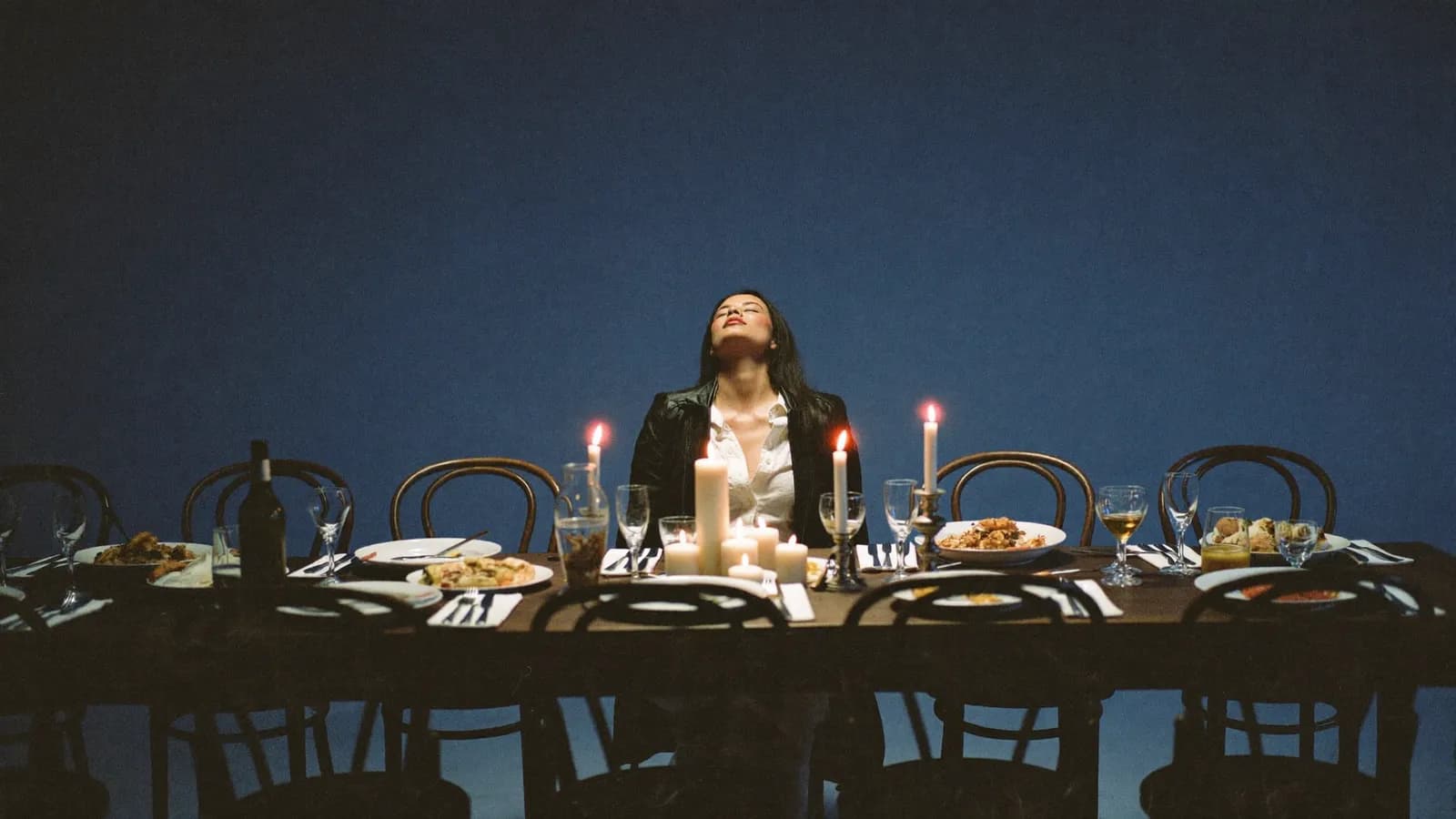
In short
You are probably the strong one if people bring you their problems but rarely ask about yours, if asking for help feels physically impossible, and if you cannot remember the last time someone checked whether you were actually okay. Below are 21 signs drawn from how the pattern really shows up: in your reflexes, your relationships, and your body. The more of them that land, the more likely this is not your personality. It is a role you were handed early, and roles can be set down.
New here? The free Sacred Path quiz reads which of these patterns is running you, in about ninety seconds.
Nobody applies for the job of the strong one. It gets assigned, usually early, usually quietly, and usually to the girl who noticed what needed doing before anyone asked. Decades later she has a full life, people who love her, a reputation for handling things, and a tiredness she cannot explain to anyone because, by every visible measure, she is fine.
If you suspect that woman is you, the signs below will not read like a checklist. They will read like surveillance.
They come in three layers: how you operate, what it is doing to you, and what nobody around you sees. Count honestly.
How you operate
1 · You are the emergency contact for everyone in your life. Not just formally. When something breaks, in a family, a friendship, a workplace, the first call goes to you, and everyone involved considers this natural, including you.
2 · You hear "I don't know how you do it" regularly. And something in you winces every time, because the honest answer is: at a cost nobody has asked about.
3 · Asking for help feels physically wrong. Not humbling, wrong. You will drive across town rather than ask for the small favor. You would rather do two people's work than have the conversation about sharing it.
4 · You answer "how are you?" with a status report on other people. The kids are good, work is busy, your mother is doing better. Minutes can pass before you notice that nothing you said was about you.
5 · You pre-solve problems no one has noticed yet. The gift is real: you see three steps ahead. The trap is that you feel responsible for everything you can foresee, which, with your eyesight, is everything.
6 · Delegating feels harder than doing. By the time you have explained it, checked it, and quietly redone it, you have confirmed the belief that started the whole cycle: easier to just do it yourself.
7 · You are the calmest person in every crisis. People marvel at it. What they do not know is that you switched something off to become this, and you have not been able to find the switch since.
8 · Your plans are the ones that flex. When schedules collide, yours yields. Your rest, your appointments, your projects are always the ones that turn out to be movable. Somehow this never runs in the other direction.
What it is doing to you
9 · You are tired in a way sleep does not fix. Not sleepiness. A bone-deep depletion that a full night, even a vacation, does not reach, because what is depleted is not energy. It is the self that has been output-only for decades.
10 · Rest makes you anxious instead of restored. Sitting still feels like neglecting something. If a free afternoon makes your skin itch, there is a reason: slowing down can genuinely feel unsafe to a system trained on vigilance.
11 · There is a low hum of resentment you are ashamed of. You volunteered for all of it, so who exactly would you complain to? The resentment feels illegitimate. It is not. It is the sound of an unpaid ledger.
12 · You have quiet fantasies of disappearing. Not of harm, of absence. A hospital stay with no visitors. A hotel room no one knows about. A week where nobody can find you. This is the exhaustion talking, and it is worth hearing what it is saying.
13 · Your body has started sending invoices. The clenched jaw, the shoulders that live near your ears, the broken sleep, the wired-but-exhausted baseline. Carrying everything is not a metaphor to a nervous system. It is a workload, and in the perimenopausal years the body often stops subsidising it.
14 · You feel most yourself when you are needed. And strangely hollow when you are not. Usefulness became identity so long ago that being wanted, rather than needed, feels almost unbearable to receive.
15 · Joy has become something you witness. Your pleasure is watching them enjoy: the meal you cooked, the trip you planned, the life you hold up. Somewhere back there, your own appetite went into storage with the rest of the feminine current.
What nobody sees
16 · Nobody checks on you. They assume you are fine, because you have spent a lifetime making sure they would. The strong friend is the least-checked-on person in every room she holds together.
17 · Your relationships run one-way, and you built them that way. The people who love you love you from the receiving end, because that is the only end you ever offered them. The love is real. The mutuality often is not.
18 · You edit your struggles before sharing them. On the rare occasion you open up, you package it: past tense, lesson attached, already handled. You present solved problems only. Live ones feel like a burden no one signed up for.
19 · People confide in you within minutes of meeting you. Strangers sense the container. You have heard "I've never told anyone this" from people whose last names you did not yet know. Nobody wonders where the container puts what it carries.
20 · Someone once saw through it, and you never forgot. One person, once, looked past the competence and asked if you were actually okay, and the question nearly undid you. That memory is data about how rarely it happens, and how much of you waits for it.
21 · You already know. You did not need this list. You recognised yourself in the title. Somewhere under the competence you have known for years that this role is costing more than it returns, and you have kept carrying it anyway, because who would hold it all if you stopped?
What your count actually means
If you counted five or more, especially from the last section, you are not reading about a personality quirk. You are reading about a survival pattern with a long history: somewhere early, being capable was how you stayed safe, loved, or needed, and thousands of repetitions turned an adaptation into an identity. The full anatomy of how that happens, and what it costs over decades, is mapped in the strong one guide.
But here is the part the checklist cannot give you, and it is the part that matters.
Strength was never the problem. Yours is real. It built careers and raised people and held rooms together through years that would have flattened someone else. The problem is that somewhere along the way you lost the ability to put it down, and strength without the option of rest is not power. It is a sentence.
Real power, the kind you were actually built for, is choice. Strength you pick up because you decide to, and set down when it is your turn to be held. Getting the choice back is not a personality transplant, and it does not happen through willpower. It happens in small repetitions, the same way the role was built: one undone task, one honest answer, one refusable ask at a time. And it begins with something simpler than any of that: seeing the pattern clearly enough to call it a pattern, instead of calling it you.
This is reflection, not therapy or a diagnosis. If exhaustion or low mood is heavy, persistent, or frightening, please reach out to a qualified professional. You of all people are allowed to be helped.
Common questions
What is strong woman syndrome?
It is not a medical diagnosis but a widely recognised pattern: the constant pressure to appear competent, composed, and caring even while exhausted or hurting. It usually forms early, when being capable was how a girl stayed safe or valued, and it hardens into an identity that is hard to put down even when it costs her health and relationships.
Is being the strong one a bad thing?
The strength itself is real and it built real things. The problem is the lack of choice. Strength you can use when you decide to is power. Strength you cannot put down, even when you are depleted, is a role. The signs below are about telling those two apart.
Why do people never check on the strong one?
Because you trained them, kindly and thoroughly, over years. Every crisis you absorbed alone and every 'I'm fine' taught the people who love you that you do not need checking on. They usually are not careless. They are believing the performance you perfected.
How does the strong one start to change?
Small and concrete, not dramatic. Let one low-stakes thing stay undone. Make one refusable request. Give one honest answer to 'how are you'. The pattern was built through thousands of small repetitions and it loosens the same way. If you want a starting map, begin with understanding the pattern itself before trying to fix it.
If any of this felt like it was written about you, that is exactly what the free Sacred Path reading is for. It names your pattern and the doorway back to yourself.