In short
Perimenopause and relationships collide mainly through distance rather than open conflict. Fluctuating hormones commonly disturb sleep, mood, and libido, which changes how connected and how touchable a woman feels. The deeper strain is capacity. After decades of managing everyone's feelings, she no longer has the surplus to manage her partner's feelings about her symptoms too.
New here? The free Sacred Path quiz reads which of these patterns is running you, in about ninety seconds.
You half expected the hot flashes. You were probably braced for the temper.
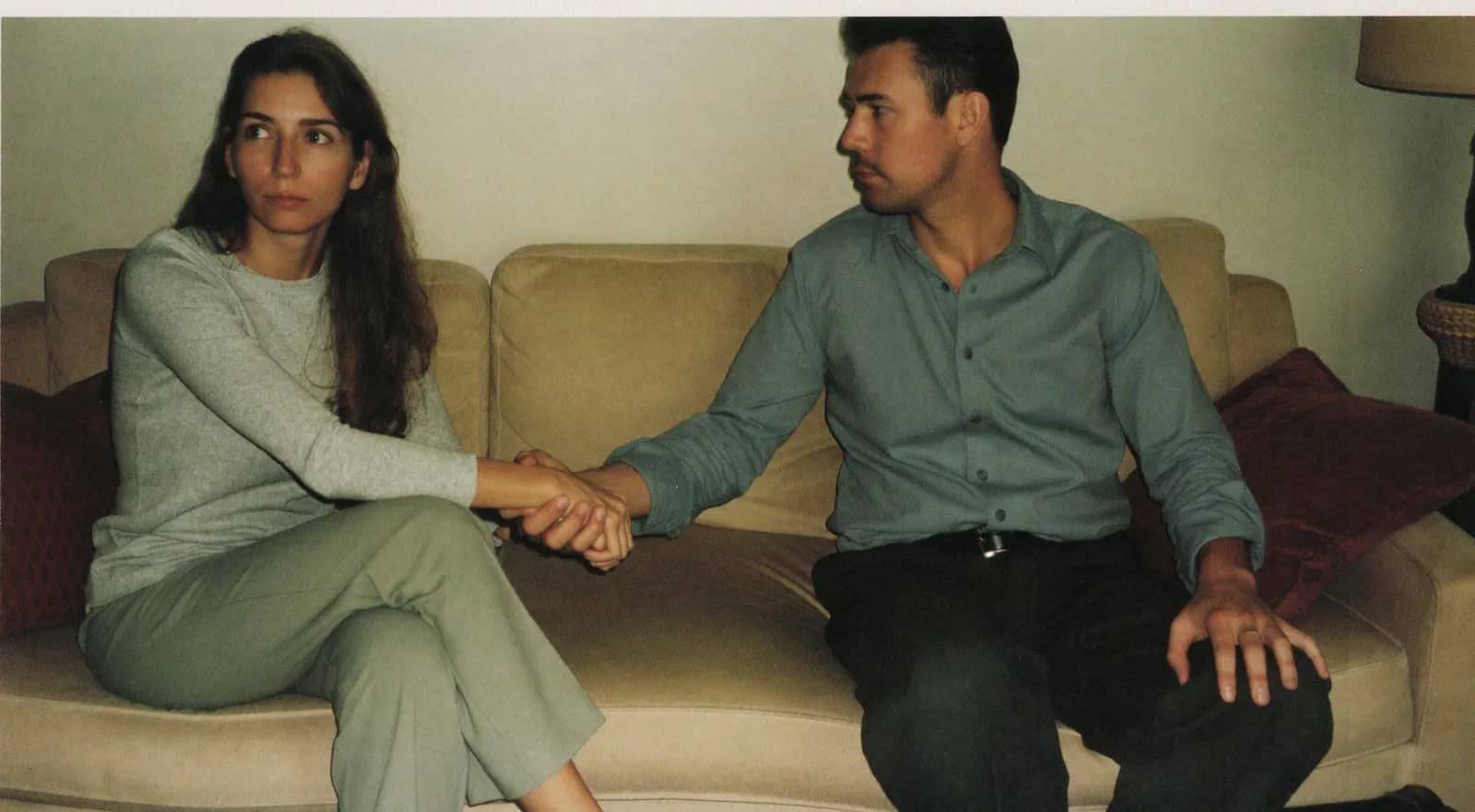
Nobody mentioned this part. Sitting three feet from the man you have lived with for fifteen years, in your own kitchen, on an ordinary Tuesday, with the feeling of glass between you. There has been no fight. Nothing you could put into a sentence if he asked what was wrong. Just a distance you did not choose, and underneath it a small cold thought you would never say out loud: I do not know how to get back to him, and I am too tired to try tonight.
How does perimenopause affect relationships?
When people talk about perimenopause and relationships, they usually mean conflict. In practice it arrives as distance.
Perimenopause is the stretch of hormonal transition before periods stop, and both the NHS and the Mayo Clinic list mood changes, disturbed sleep, and reduced sex drive among its common symptoms. Each of those lands on a couple. Eight months of broken sleep leaves nobody much patience. When desire goes quiet you stop reaching for him, and after a while he stops reaching too. And when your own skin feels borrowed, you pull back a little from the person most likely to notice.
None of it announces itself. It accumulates, one unremarkable evening at a time, until two people who love each other are living in careful parallel and both privately wondering what happened.
There is a louder version of this, the sudden fury over a wet towel, and it has its own physiology; our guide to perimenopause rage covers that in full. This piece is about the silence that comes after the heat, or instead of it.
Why do I feel disconnected from my partner in perimenopause?
Because you became unrecognisable to yourself first, and he happens to be standing where that change is most visible.
Something has shifted at the baseline. Your values are intact. Your love is intact. But the version of you who could absorb a difficult evening and still turn towards him at the end of it was running on a chemistry that no longer holds steady. When estrogen and progesterone swing instead of moving in their old monthly rhythm, sleep, mood, and desire swing with them. You are not withholding warmth. You have less of it in reserve, and nobody has told you why yet.
Then comes the second layer, which is quieter and harder. You cannot describe what is happening to you, because you do not understand it yet. So every attempt to explain comes out as either an apology or an accusation. And he, watching the woman he knows go somewhere he cannot follow, does the thing most partners do with anything unnameable: he reads it as being about him.
Now you are managing two problems. Your symptoms, and his interpretation of your symptoms. And only one of them is happening in your body.
Why is there nothing left over for his feelings about your symptoms?
Most relationship advice steps straight over this one.
You have been the emotional weather system of this household for decades. You notice the mood drop before anyone speaks. You soften the delivery, explain the children to him and him to the children, and absorb the bad day so it does not spread through the house. That work has a name, and if you have never seen it written down, emotional labor in a relationship is worth reading, because it explains why the job is invisible and why it landed on you.
For twenty years you carried it with room to spare. Perimenopause is the first thing in your adult life to take the spare room away.
So when your own body becomes the crisis, the old system breaks in a particular place. You are still meant to be the one who handles the difficult feelings here. Except now the difficult feelings are his feelings about your symptoms: his confusion, his defensiveness, the hurt on his face when you flinched at a hand on your shoulder. And for the first time, you do not have it to give.
That is the strain underneath a lot of midlife marriages, and it almost never gets said out loud. You have been holding the emotional floor of this family since you were twenty-five. Now the floor itself has started moving, and you cannot hold both.
Why does being touched feel like one more demand?
Of everything in this season, this is the part women say least.
Reduced desire is a recognised feature of this transition. Both the NHS and the Mayo Clinic list changes in sex drive among its common symptoms, alongside physical changes that can make sex uncomfortable. None of that is a character flaw, and there are real options worth asking about. That conversation belongs with your doctor or a menopause specialist, not with an article, and not with your own research at 2am.
Something else is happening under the biology, though. You have spent the day being touched without being asked: a teenager leaning on you, a colleague's hand on your back, someone's arm across the sofa. By 10pm a hand on your waist does not always land as affection. It lands as one more request. That is touch-fatigue. A nervous system that has not been left alone since seven in the morning has nothing left for another arrival, and it says nothing at all about how much you love him.
He can see the flinch. He cannot see the reason, so he builds a story out of it, and you are too tired to correct the story, so it stands. Weeks of that, and you have both quietly concluded that something is wrong with the marriage, when the only thing wrong is that the true sentence has never been said out loud.
How do I explain perimenopause to my partner?
Forget the perfect conversation. The aim is to get one true sentence into the room, so it stops living only in your head.
Pick a flat hour. Not the ten minutes after a flinch, and not midnight. A Saturday walk or a car journey does the job, because side by side is easier than face to face when the subject is this exposed.
Lead with the body, not with the relationship. The moment you open with "we've been distant," you have started a referendum on the marriage. Open with the biology instead. Something close to: "My hormones are changing. It's called perimenopause, it can go on for years, and it's affecting my sleep, my mood, and my desire. I'm still working out what it means. It isn't about you, and it isn't something I've decided."
Say the touch part separately, and say what is still true. Try: "When I move away, it isn't rejection. My body is overloaded by the end of the day. I still want to be close to you. I need it to look different for a while, and I need us to be able to say that without it becoming a bigger conversation."
Ask for one specific thing. Understanding in general terms is impossible to deliver, so it never arrives. One concrete handoff does: the bedtime routine on weeknights, or Sunday mornings that belong to you before anyone else is awake.
Do not appoint yourself the only translator. You are already exhausted from living it; you should not also have to teach it. Send him something factual to read on his own. Our perimenopause symptoms guide exists partly for this, so the explaining is not one more job on your list.
If he cannot hear it the first time, that is common. Say it again in a week, and again after that. It lands through repetition.
Is it normal for perimenopause to strain a marriage?
Strain in these years is common, and it does not mean your relationship has failed.
But normal is not the same as fine, and endurance is not a plan. If the distance has hardened into contempt or silence, or you feel dread rather than fatigue when you hear his car in the drive, that is past what patience is meant to solve. A qualified couples therapist is the right room for that, and going early is not an admission of failure.
Your symptoms deserve the same seriousness. Sleep, mood, comfort, and desire are all worth raising, and you do not have to earn an appointment by falling apart first. A doctor or menopause specialist can talk you through what might suit your history. Walking in and saying "my sleep, my mood, and my marriage have all changed since I turned forty-three" is a complete and legitimate reason to be there.
Where this leads
You do not come through this season by staying pleasant. You come through it by saying one true sentence out loud, and then saying it again next month, when it has changed shape.
The distance is what happens when a woman who has spent her whole life being fluent in everyone else's needs finally has a need she cannot translate. Say it out loud, even clumsily, and the glass starts to thin.
If you want to see the fuller shape of what you have been carrying, and why putting any of it down feels so much like failure, the free Sacred Path quiz reads your pattern and names it. You have been the strong one for a long time. This is the season that stops letting you do it silently.
This article is written for self-understanding, in line with reputable sources such as the NHS and the Mayo Clinic. It is not medical advice, a diagnosis, or a treatment recommendation. For anything affecting your health, including hormone therapy or changes in desire and comfort, please speak with a doctor or a menopause specialist who knows your history.
Common questions
How does perimenopause affect relationships?
Usually as distance rather than drama. Broken sleep, mood changes, and shifts in desire are commonly reported in this transition, and they change how available a woman feels to the person closest to her. On top of the biology sits an unnamed strain: she is trying to understand a body that has changed while also managing her partner's reaction to that change, and there is rarely enough of her left for both.
Why do I feel disconnected from my partner in perimenopause?
Because you have become unfamiliar to yourself first, and he is standing in the place where that unfamiliarity is most visible. Disrupted sleep and fluctuating hormones affect mood and desire, and exhaustion narrows anyone's capacity for closeness. The disconnection is usually a symptom of depletion rather than evidence that the relationship has failed.
Is it normal for perimenopause to strain a marriage?
Strain during this transition is commonly reported, and it does not mean the relationship is broken. Normal is not the same as fine, though. If the distance has hardened into contempt, silence, or an ongoing sense of dread at home, that deserves real support from a qualified couples therapist rather than more patience.
How do I explain perimenopause to my partner?
Choose a neutral hour, not the middle of a bad moment. Lead with the body rather than the relationship: say that your hormones are changing, that it is affecting your sleep, mood, and desire, and that you are still working out what it means. Then make one specific request instead of asking for general understanding, and give him something factual to read so you are not the only translator.
If any of this felt like it was written about you, that is exactly what the free Sacred Path reading is for. It names your pattern and the doorway back to yourself.